

Exploring Future Trends in FRP Desulfurization Tower Technology: Innovations and Implications
Feb 24,2026
Future Trends in FRP Desulfurization Tower Technology
Table of Contents
1. Introduction to FRP Desulfurization Towers
2. Importance of Desulfurization in Industrial Processes
3. What is FRP and Why is it Used in Desulfurization?
4. Current Technological Advancements in FRP Desulfurization
5. Future Trends in FRP Desulfurization Tower Design
6. Challenges and Solutions in F
Future Trends in FRP Desulfurization Tower Technology
Table of Contents
- 1. Introduction to FRP Desulfurization Towers
- 2. Importance of Desulfurization in Industrial Processes
- 3. What is FRP and Why is it Used in Desulfurization?
- 4. Current Technological Advancements in FRP Desulfurization
- 5. Future Trends in FRP Desulfurization Tower Design
- 6. Challenges and Solutions in FRP Desulfurization Technologies
- 7. Regulatory Impacts on FRP Desulfurization Technology
- 8. FAQs about FRP Desulfurization Towers
- 9. Conclusion
1. Introduction to FRP Desulfurization Towers
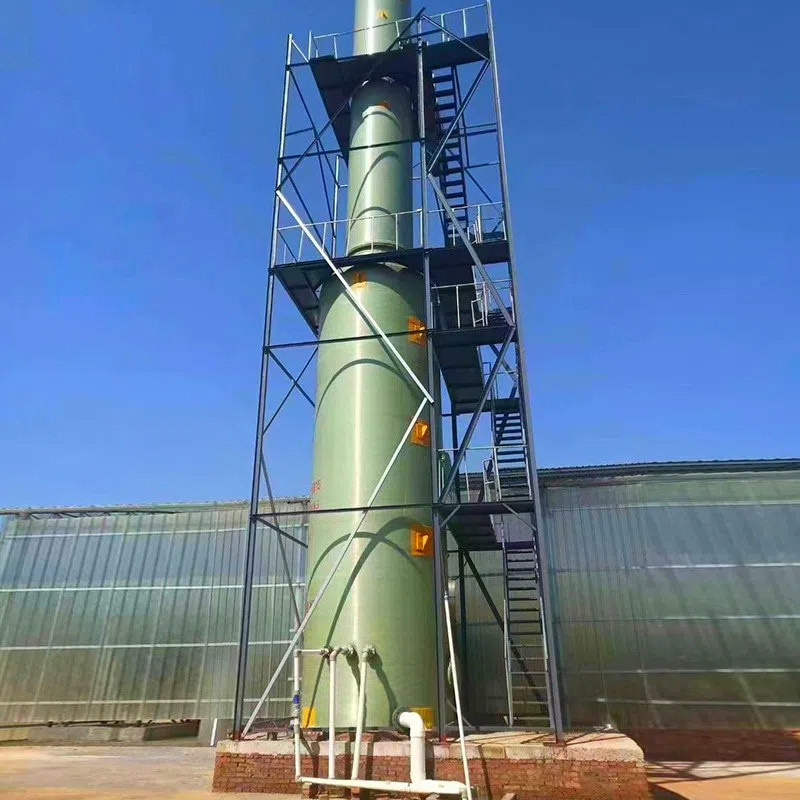
In today’s industrial landscape, the demand for effective environmental remediation technologies is more critical than ever. **FRP (Fiber Reinforced Plastic)** desulfurization towers have emerged as pivotal components in the fight against sulfur oxides (SOx) emissions. By utilizing innovative materials and designs, these towers facilitate the removal of harmful pollutants from flue gases, contributing to cleaner air quality and sustainability.
As industries face stricter environmental regulations and heightened public awareness, understanding the **future trends in FRP desulfurization tower technology** is essential for ensuring compliance and fostering innovation.
2. Importance of Desulfurization in Industrial Processes
Desulfurization is a critical process in various industries, particularly in power generation, oil refining, and chemical manufacturing. The significance of efficiently removing sulfur compounds cannot be overstated as the consequences of neglecting this aspect can lead to severe environmental and health impacts, including acid rain and respiratory issues.
**Key reasons for desulfurization include:**
- **Regulatory Compliance:** Governments worldwide are enforcing stricter emissions regulations, necessitating the adoption of effective desulfurization technologies.
- **Public Health:** Reducing sulfur emissions improves air quality, protecting public health and contributing to a sustainable future.
- **Economic Benefits:** Companies that invest in advanced desulfurization technologies can benefit from operational efficiencies and potentially lower costs in the long run.
3. What is FRP and Why is it Used in Desulfurization?
**FRP, or Fiber Reinforced Plastic**, is a composite material made by combining a polymer matrix with fiber reinforcement. This combination offers a range of advantages, making FRP an ideal choice for desulfurization tower applications:
- **Corrosion Resistance:** FRP exhibits excellent resistance to corrosive substances, such as sulfuric acid, making it suitable for harsh environments.
- **Lightweight:** Compared to traditional materials like steel, FRP is significantly lighter, reducing transportation and installation costs.
- **Design Flexibility:** FRP can be molded into complex shapes, allowing for innovative tower designs that enhance efficiency and performance.
- **Durability:** FRP materials have a long lifespan, minimizing the need for frequent replacements and maintenance.
These attributes position FRP as a frontrunner in the development of advanced desulfurization solutions.
4. Current Technological Advancements in FRP Desulfurization
The field of FRP desulfurization is rapidly evolving, with several technological advancements paving the way for higher efficiency and effectiveness:
- **Advanced Absorption Techniques:** Modern FRP desulfurization towers incorporate advanced absorption methods, such as packed bed systems and spray towers, to enhance contact between flue gases and absorbents.
- **Integration of IoT and Smart Technologies:** The incorporation of Internet of Things (IoT) technology allows for real-time monitoring and control of desulfurization processes, optimizing performance and reducing downtime.
- **Enhanced Absorbent Materials:** The development of new absorbent materials, including hybrid and nano-structured adsorbents, significantly improves the desulfurization rate and overall efficiency.
- **Modular Designs:** The trend towards modular FRP towers offers flexibility in scaling operations, making it easier for industries to adapt to changing production demands.
These advancements not only improve the operational efficiency of desulfurization systems but also ensure compliance with evolving environmental regulations.
5. Future Trends in FRP Desulfurization Tower Design
As we look to the future, several trends are likely to shape the design and application of FRP desulfurization towers:
5.1 Hybrid Systems
The integration of **hybrid systems** that combine multiple desulfurization technologies is expected to gain traction. By leveraging the strengths of various methods, these systems will provide enhanced performance and efficiency.
5.2 Sustainable Materials
Sustainability will drive innovation in FRP materials and design. Future towers may incorporate bio-based resins and recycled fibers, reducing environmental impact while maintaining performance.
5.3 Increased Automation
With the rise of Industry 4.0, future FRP desulfurization towers will likely feature increased automation, enabling autonomous operation, self-diagnostics, and predictive maintenance, ultimately reducing human intervention.
5.4 Modular and Scalable Solutions
The demand for adaptable and scalable solutions will lead to the development of modular FRP towers that can be easily expanded or contracted based on operational needs, ensuring flexibility across various industrial applications.
6. Challenges and Solutions in FRP Desulfurization Technologies
While advancements in FRP desulfurization technology are promising, several challenges remain:
6.1 High Initial Costs
The initial investment in FRP desulfurization systems can be significant. However, the long-term savings in maintenance and operational efficiencies often justify the upfront costs.
6.2 Technical Limitations
Certain technical limitations, such as fluctuation in gas compositions, may affect the performance of desulfurization systems. Continuous research and development aim to address these challenges through improved designs and materials.
6.3 Regulatory Compliance
Keeping up with evolving regulations can be daunting for industries. Collaborating with regulatory bodies and investing in compliance technologies can mitigate these challenges.
7. Regulatory Impacts on FRP Desulfurization Technology
The regulatory landscape for emissions control is continually evolving, prompting industries to adapt their technologies and practices. Key impacts include:
- **Stricter Emission Limits:** New regulations often impose lower permissible emission limits, necessitating the adoption of more effective desulfurization technologies.
- **Incentives for Innovation:** Government incentives for adopting cleaner technologies can accelerate the development and implementation of advanced FRP desulfurization systems.
- **Emphasis on Sustainability:** Regulations increasingly focus on sustainability and the lifecycle impact of technologies, driving industries to seek eco-friendly materials and processes.
8. FAQs about FRP Desulfurization Towers
8.1 What industries utilize FRP desulfurization towers?
Industries such as power generation, petrochemical, and waste management utilize FRP desulfurization towers to comply with environmental regulations and reduce pollution.
8.2 How do FRP desulfurization towers work?
FRP desulfurization towers work by passing flue gases through absorbents that chemically react with sulfur compounds, effectively removing them from the gas stream.
8.3 What are the advantages of using FRP over traditional materials?
FRP offers advantages such as corrosion resistance, lightweight properties, design flexibility, and durability, making it a superior choice for desulfurization applications.
8.4 Are there any maintenance requirements for FRP desulfurization towers?
While FRP towers require less maintenance than traditional systems, regular inspections and cleaning are necessary to ensure optimal performance.
8.5 What is the future outlook for FRP desulfurization technology?
The future outlook for FRP desulfurization technology is promising, with innovations expected in materials, automation, and sustainable practices that will enhance efficiency and effectiveness.
9. Conclusion
The landscape of **FRP desulfurization tower technology** is evolving at a rapid pace, driven by technological advancements, regulatory changes, and the global push for sustainability. As industries strive to meet stricter emissions regulations and public expectations for clean air, the importance of effective desulfurization cannot be overstated.
By embracing innovations, such as hybrid systems, sustainable materials, and automation, industries can enhance their desulfurization processes while minimizing environmental impact. The commitment to overcoming challenges and adapting to a changing regulatory environment will be crucial in shaping the future of FRP desulfurization technology. As we move forward, collaboration between industries, regulators, and technology developers will be essential in achieving cleaner air and a sustainable future.
Perhaps You Also Need:
All
- All
- Product Management
- News
- Introduction
- Enterprise outlets
- FAQ
- Enterprise Video
- Enterprise Atlas
Mobile Phone
Address
China ● Glass Steel City, Zaoqiang County, Hengshui City, Hebei Province