

Understanding Pultruded Fiberglass Structural Profiles: Advantages and Applications
Oct 19,2025
Pultruded fiberglass structural profiles are composite materials made by continuously drawing fiberglass strands through a resin bath and then curing them in a heated die. This manufacturing process results in strong, lightweight profiles that possess high levels of durability and resistance to corrosion, making them ideal for a wide range of construction applications.
One of the significant advan
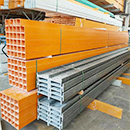
Pultruded fiberglass structural profiles are composite materials made by continuously drawing fiberglass strands through a resin bath and then curing them in a heated die. This manufacturing process results in strong, lightweight profiles that possess high levels of durability and resistance to corrosion, making them ideal for a wide range of construction applications.
One of the significant advantages of pultruded fiberglass profiles is their resistance to environmental factors. Unlike traditional materials like steel or wood, fiberglass does not rot, rust, or corrode when exposed to moisture, chemicals, or UV radiation. This property greatly extends the lifespan of structural components, reducing maintenance costs and ensuring the integrity of the structure over time.
In addition to their durability, pultruded fiberglass structural profiles are notably lightweight. This feature simplifies handling and installation, which can lead to quicker project completion times. The reduced weight also lowers transportation costs and helps in minimizing the overall environmental impact during construction.
Another appealing aspect of these profiles is their versatility. Pultruded fiberglass can be shaped into various forms, including beams, channels, and angles, allowing designers and architects to create innovative and intricate designs. These profiles can seamlessly blend into both functional and aesthetic elements of a building, making them suitable for various architectural styles.
Energy efficiency is also a key consideration in modern construction, and pultruded fiberglass profiles contribute positively in this area. Their insulating properties help minimize energy loss, making buildings more energy-efficient. This can lead to lower heating and cooling costs, contributing to sustainability efforts in the construction industry.
Furthermore, pultruded fiberglass profiles are non-conductive, which makes them safe for electrical applications. This characteristic is particularly beneficial in environments where electrical hazards are a concern, such as in industrial settings or areas prone to lightning strikes.
In summary, pultruded fiberglass structural profiles offer numerous advantages, including durability, lightweight construction, versatility in design, energy efficiency, and safety in electrical applications. As the architecture and building materials industry continues to evolve, these innovative materials are becoming an increasingly popular choice for modern construction projects. Their unique properties not only enhance the performance of structures but also contribute to sustainable building practices, making them a smart option for professionals looking to optimize their designs and ensure long-lasting results.
One of the significant advantages of pultruded fiberglass profiles is their resistance to environmental factors. Unlike traditional materials like steel or wood, fiberglass does not rot, rust, or corrode when exposed to moisture, chemicals, or UV radiation. This property greatly extends the lifespan of structural components, reducing maintenance costs and ensuring the integrity of the structure over time.
In addition to their durability, pultruded fiberglass structural profiles are notably lightweight. This feature simplifies handling and installation, which can lead to quicker project completion times. The reduced weight also lowers transportation costs and helps in minimizing the overall environmental impact during construction.
Another appealing aspect of these profiles is their versatility. Pultruded fiberglass can be shaped into various forms, including beams, channels, and angles, allowing designers and architects to create innovative and intricate designs. These profiles can seamlessly blend into both functional and aesthetic elements of a building, making them suitable for various architectural styles.
Energy efficiency is also a key consideration in modern construction, and pultruded fiberglass profiles contribute positively in this area. Their insulating properties help minimize energy loss, making buildings more energy-efficient. This can lead to lower heating and cooling costs, contributing to sustainability efforts in the construction industry.
Furthermore, pultruded fiberglass profiles are non-conductive, which makes them safe for electrical applications. This characteristic is particularly beneficial in environments where electrical hazards are a concern, such as in industrial settings or areas prone to lightning strikes.
In summary, pultruded fiberglass structural profiles offer numerous advantages, including durability, lightweight construction, versatility in design, energy efficiency, and safety in electrical applications. As the architecture and building materials industry continues to evolve, these innovative materials are becoming an increasingly popular choice for modern construction projects. Their unique properties not only enhance the performance of structures but also contribute to sustainable building practices, making them a smart option for professionals looking to optimize their designs and ensure long-lasting results.
Perhaps You Also Need:
All
- All
- Product Management
- News
- Introduction
- Enterprise outlets
- FAQ
- Enterprise Video
- Enterprise Atlas
Address
China ● Glass Steel City, Zaoqiang County, Hengshui City, Hebei Province