

Understanding Industrial FRP Desulfurization Towers: Essential Insights for the Chemical Industry
Nov 18,2025
Industrial FRP (Fiberglass Reinforced Plastic) desulfurization towers play a crucial role in the chemical industry, especially in applications involving rubber processing and other manufacturing sectors where sulfur emissions can be a concern. These towers are designed to remove sulfur dioxide (SO2) from exhaust gases, effectively mitigating air pollution and adhering to environmental regulations.
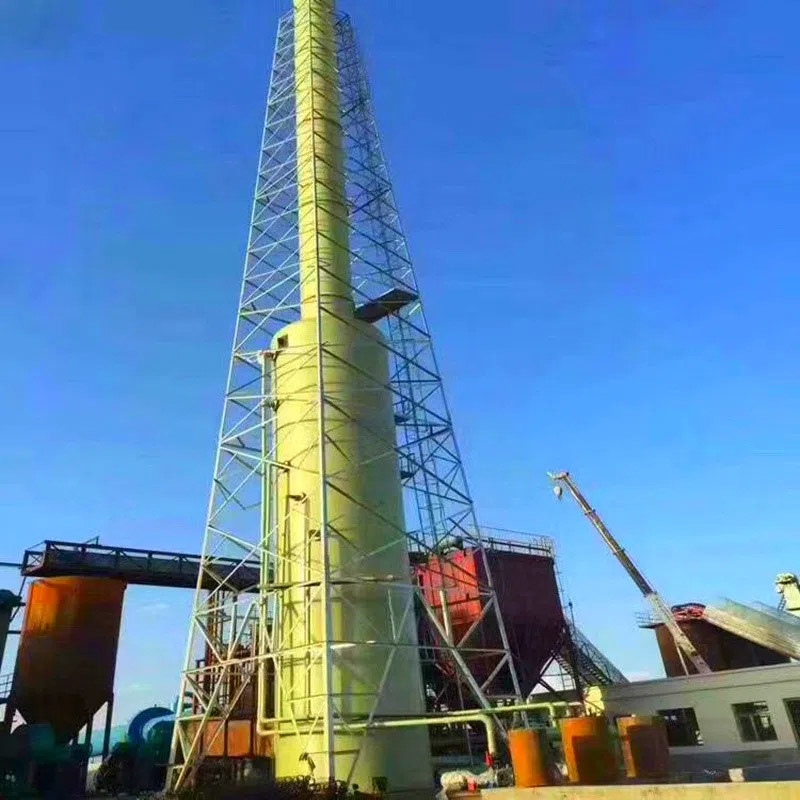
Industrial FRP (Fiberglass Reinforced Plastic) desulfurization towers play a crucial role in the chemical industry, especially in applications involving rubber processing and other manufacturing sectors where sulfur emissions can be a concern. These towers are designed to remove sulfur dioxide (SO2) from exhaust gases, effectively mitigating air pollution and adhering to environmental regulations.
The primary function of an FRP desulfurization tower is to utilize a scrubbing process, where the flue gases containing sulfur dioxide are treated with a suitable absorbent, typically a basic solution, to convert SO2 into a less harmful byproduct. The choice of absorbent, the design of the tower, and operational parameters greatly influence the efficiency of the desulfurization process. Notably, FRP materials are favored in tower construction because of their corrosion resistance, lightweight properties, and suitability for various operational environments.
One of the significant advantages of using FRP desulfurization towers is their durability. Unlike traditional materials such as steel, FRP does not corrode when exposed to acidic gases and harsh conditions, leading to lower maintenance costs and extended service life. Additionally, these towers can be designed to occupy less space compared to conventional systems, making them ideal for facilities where space is at a premium.
The operational efficiency of an Industrial FRP desulfurization tower can be further enhanced through proper monitoring and control of parameters such as temperature, pressure, and flow rates. Implementing advanced technologies such as real-time monitoring systems can help optimize performance, ensuring that the desulfurization process runs smoothly and effectively.
Moreover, the adoption of FRP desulfurization towers aligns with the industry's increasing shift towards sustainable practices. By effectively capturing and neutralizing harmful emissions, these solutions play an essential role in reducing the overall environmental impact of chemical manufacturing processes. As regulatory requirements become stricter and public awareness of environmental issues grows, investing in efficient desulfurization technology is becoming a strategic priority for many companies.
In conclusion, Industrial FRP desulfurization towers are vital components in the pursuit of cleaner production methods in the chemical and rubber processing sectors. Their innovative design, combined with the advantageous properties of fiberglass materials, makes them a preferred choice for companies aiming to balance operational efficiency with environmental responsibility. Understanding the workings and benefits of these towers is essential for stakeholders committed to advancing sustainable practices in their operations.
The primary function of an FRP desulfurization tower is to utilize a scrubbing process, where the flue gases containing sulfur dioxide are treated with a suitable absorbent, typically a basic solution, to convert SO2 into a less harmful byproduct. The choice of absorbent, the design of the tower, and operational parameters greatly influence the efficiency of the desulfurization process. Notably, FRP materials are favored in tower construction because of their corrosion resistance, lightweight properties, and suitability for various operational environments.
One of the significant advantages of using FRP desulfurization towers is their durability. Unlike traditional materials such as steel, FRP does not corrode when exposed to acidic gases and harsh conditions, leading to lower maintenance costs and extended service life. Additionally, these towers can be designed to occupy less space compared to conventional systems, making them ideal for facilities where space is at a premium.
The operational efficiency of an Industrial FRP desulfurization tower can be further enhanced through proper monitoring and control of parameters such as temperature, pressure, and flow rates. Implementing advanced technologies such as real-time monitoring systems can help optimize performance, ensuring that the desulfurization process runs smoothly and effectively.
Moreover, the adoption of FRP desulfurization towers aligns with the industry's increasing shift towards sustainable practices. By effectively capturing and neutralizing harmful emissions, these solutions play an essential role in reducing the overall environmental impact of chemical manufacturing processes. As regulatory requirements become stricter and public awareness of environmental issues grows, investing in efficient desulfurization technology is becoming a strategic priority for many companies.
In conclusion, Industrial FRP desulfurization towers are vital components in the pursuit of cleaner production methods in the chemical and rubber processing sectors. Their innovative design, combined with the advantageous properties of fiberglass materials, makes them a preferred choice for companies aiming to balance operational efficiency with environmental responsibility. Understanding the workings and benefits of these towers is essential for stakeholders committed to advancing sustainable practices in their operations.
Perhaps You Also Need:
All
- All
- Product Management
- News
- Introduction
- Enterprise outlets
- FAQ
- Enterprise Video
- Enterprise Atlas
Address
China ● Glass Steel City, Zaoqiang County, Hengshui City, Hebei Province