

Understanding Industrial FRP Desulfurization Towers: Key Insights for Chemical Professionals
Apr 20,2026
Industrial FRP (Fiberglass Reinforced Plastic) desulfurization towers play a pivotal role in minimizing sulfur emissions in various industrial applications, including chemical and rubber processing. These towers are designed to effectively remove sulfur oxides from exhaust gases, ensuring compliance with environmental regulations and fostering sustainable practices within manufacturing processes.
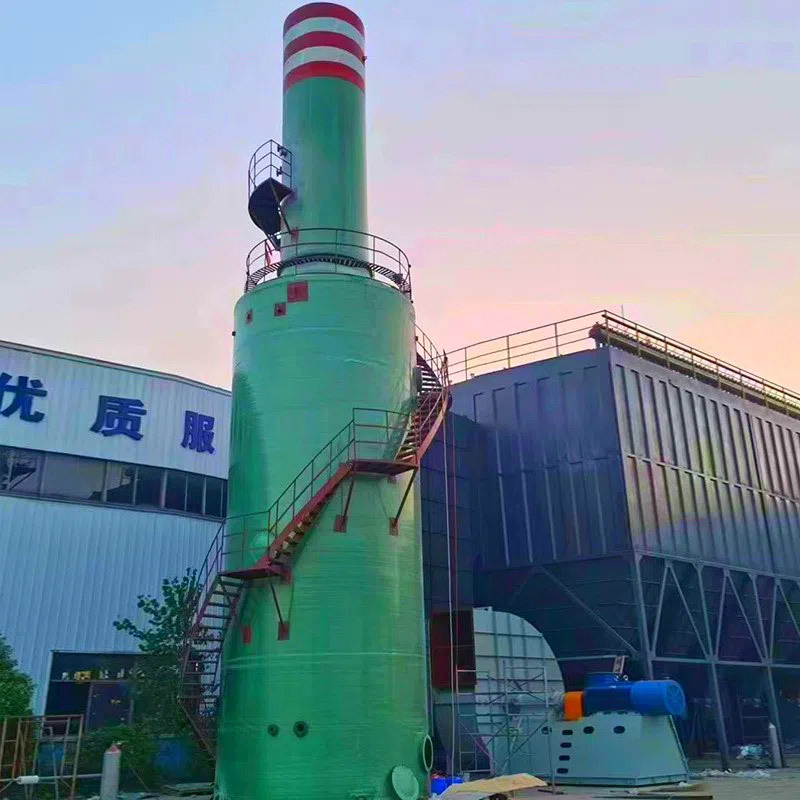
Industrial FRP (Fiberglass Reinforced Plastic) desulfurization towers play a pivotal role in minimizing sulfur emissions in various industrial applications, including chemical and rubber processing. These towers are designed to effectively remove sulfur oxides from exhaust gases, ensuring compliance with environmental regulations and fostering sustainable practices within manufacturing processes.
The primary mechanism of an Industrial FRP desulfurization tower involves the absorption of sulfur dioxide (SO2) from flue gases using alkaline absorbents, typically a lime or sodium-based solution. As the gas stream enters the tower, it is evenly distributed across packing materials, which increase the contact area between the gas and the absorbent. This process enables efficient SO2 absorption, transforming it into a solid or liquid form that can be easily managed or disposed of.
One of the notable advantages of using FRP materials in the construction of desulfurization towers is their inherent resistance to corrosion and chemical damage. Traditional materials, such as steel, often suffer from accelerated wear and tear in the harsh environments associated with sulfur removal processes. In contrast, FRP towers can withstand these aggressive conditions, leading to lower maintenance costs and extended operational lifespans.
Moreover, the lightweight nature of fiberglass reinforces the structural integrity of these towers, making them easier to install and maneuver. This is particularly beneficial for facilities with space constraints or those undergoing retrofitting. Additionally, the versatility of FRP allows for the design of custom solutions tailored to specific industrial needs, enhancing the overall efficiency of the desulfurization process.
When selecting an Industrial FRP desulfurization tower, it is crucial to consider factors such as the volume and composition of the gases being treated, the required efficiency levels, and the specific environmental regulations applicable to the industry. Understanding these variables will help in choosing the right tower configuration and materials, ultimately optimizing performance and ensuring regulatory compliance.
In summary, Industrial FRP desulfurization towers are indispensable in the fight against air pollution and play a significant role in promoting cleaner industrial practices. Their advantages in terms of durability, efficiency, and customization make them a compelling choice for chemical and rubber processing facilities striving to reduce their environmental footprint while maintaining operational effectiveness. As industries continue to evolve and face stricter environmental standards, the importance of such systems will only grow, making knowledge about their function and implementation essential for professionals in the field.
The primary mechanism of an Industrial FRP desulfurization tower involves the absorption of sulfur dioxide (SO2) from flue gases using alkaline absorbents, typically a lime or sodium-based solution. As the gas stream enters the tower, it is evenly distributed across packing materials, which increase the contact area between the gas and the absorbent. This process enables efficient SO2 absorption, transforming it into a solid or liquid form that can be easily managed or disposed of.
One of the notable advantages of using FRP materials in the construction of desulfurization towers is their inherent resistance to corrosion and chemical damage. Traditional materials, such as steel, often suffer from accelerated wear and tear in the harsh environments associated with sulfur removal processes. In contrast, FRP towers can withstand these aggressive conditions, leading to lower maintenance costs and extended operational lifespans.
Moreover, the lightweight nature of fiberglass reinforces the structural integrity of these towers, making them easier to install and maneuver. This is particularly beneficial for facilities with space constraints or those undergoing retrofitting. Additionally, the versatility of FRP allows for the design of custom solutions tailored to specific industrial needs, enhancing the overall efficiency of the desulfurization process.
When selecting an Industrial FRP desulfurization tower, it is crucial to consider factors such as the volume and composition of the gases being treated, the required efficiency levels, and the specific environmental regulations applicable to the industry. Understanding these variables will help in choosing the right tower configuration and materials, ultimately optimizing performance and ensuring regulatory compliance.
In summary, Industrial FRP desulfurization towers are indispensable in the fight against air pollution and play a significant role in promoting cleaner industrial practices. Their advantages in terms of durability, efficiency, and customization make them a compelling choice for chemical and rubber processing facilities striving to reduce their environmental footprint while maintaining operational effectiveness. As industries continue to evolve and face stricter environmental standards, the importance of such systems will only grow, making knowledge about their function and implementation essential for professionals in the field.
Perhaps You Also Need:
All
- All
- Product Management
- News
- Introduction
- Enterprise outlets
- FAQ
- Enterprise Video
- Enterprise Atlas
Address
China ● Glass Steel City, Zaoqiang County, Hengshui City, Hebei Province