

Understanding the Role of Fiberglass Pultruded Angle Bars in Construction
Jun 09,2025
In the realm of construction and architectural materials, fiberglass pultruded angle bars have gained significant attention due to their unique properties and advantages over traditional materials like steel and aluminum. These angle bars are formed through a pultrusion process, which involves the continuous pulling of fiberglass through a resin bath and then into a heated die. This process result
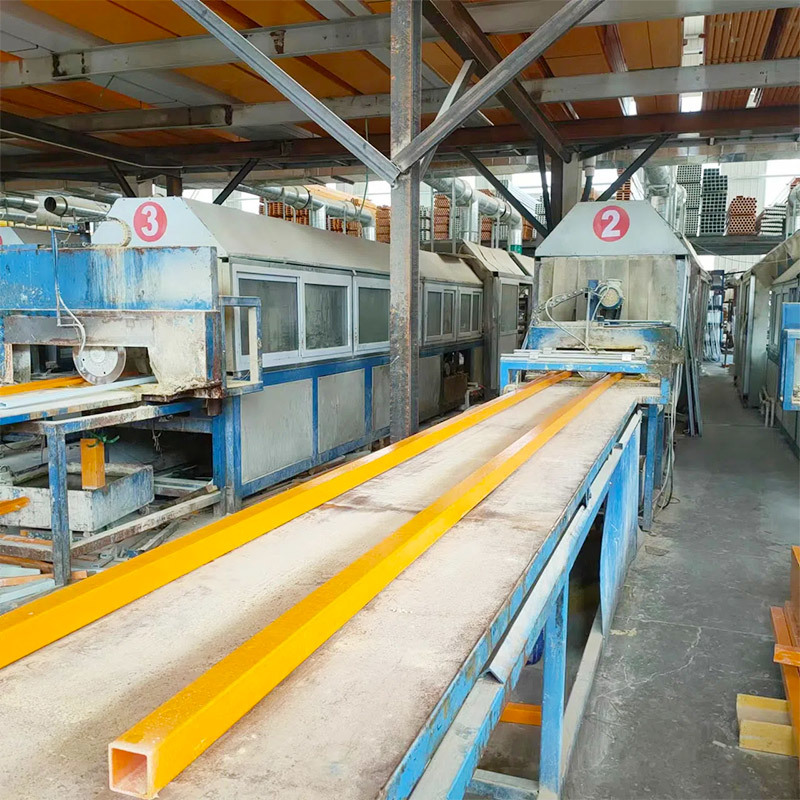
In the realm of construction and architectural materials, fiberglass pultruded angle bars have gained significant attention due to their unique properties and advantages over traditional materials like steel and aluminum. These angle bars are formed through a pultrusion process, which involves the continuous pulling of fiberglass through a resin bath and then into a heated die. This process results in a composite material that boasts high strength, lightweight characteristics, and excellent corrosion resistance.
One of the primary benefits of fiberglass pultruded angle bars is their durability. Unlike metal counterparts, fiberglass does not rust or corrode when exposed to moisture or harsh chemicals, making it an ideal choice for environments with high humidity or exposure to corrosive substances. This characteristic extends the lifespan of construction projects and reduces maintenance costs, which is crucial for both residential and commercial applications.
Moreover, the lightweight nature of fiberglass pultruded angle bars facilitates easier handling and installation, reducing labor costs and time on construction sites. Their low weight does not compromise strength; in fact, these angle bars provide a remarkable strength-to-weight ratio, making them suitable for a variety of structural applications, from framing to support brackets.
In terms of thermal and electrical insulation, fiberglass outperforms many traditional materials. It does not conduct electricity, making it a safe option in electrically sensitive environments. Additionally, fiberglass can withstand a broader range of temperatures without significant deformation or loss of integrity, which is beneficial in diverse climatic conditions.
Fiberglass pultruded angle bars also offer design flexibility. They can be manufactured in various shapes, sizes, and colors, allowing architects and builders to create visually appealing structures while meeting specific project requirements. This adaptability makes them popular in both new constructions and renovations.
Sustainability is another important consideration for modern construction materials, and fiberglass pultruded angle bars often score high in this area as well. Many manufacturers focus on environmentally friendly production processes, and fiberglass itself can be recycled, contributing to a more sustainable building industry.
In conclusion, fiberglass pultruded angle bars present a multitude of advantages for construction and architectural projects. Their strength, durability, lightweight nature, and resistance to environmental factors make them a superior choice for various structural applications. As the construction industry continues to evolve, the demand for innovative materials like fiberglass will likely increase, driving further advancements and applications within the sector. For anyone involved in construction or renovation, understanding the benefits of fiberglass pultruded angle bars could be essential for optimizing both performance and value in their projects.
One of the primary benefits of fiberglass pultruded angle bars is their durability. Unlike metal counterparts, fiberglass does not rust or corrode when exposed to moisture or harsh chemicals, making it an ideal choice for environments with high humidity or exposure to corrosive substances. This characteristic extends the lifespan of construction projects and reduces maintenance costs, which is crucial for both residential and commercial applications.
Moreover, the lightweight nature of fiberglass pultruded angle bars facilitates easier handling and installation, reducing labor costs and time on construction sites. Their low weight does not compromise strength; in fact, these angle bars provide a remarkable strength-to-weight ratio, making them suitable for a variety of structural applications, from framing to support brackets.
In terms of thermal and electrical insulation, fiberglass outperforms many traditional materials. It does not conduct electricity, making it a safe option in electrically sensitive environments. Additionally, fiberglass can withstand a broader range of temperatures without significant deformation or loss of integrity, which is beneficial in diverse climatic conditions.
Fiberglass pultruded angle bars also offer design flexibility. They can be manufactured in various shapes, sizes, and colors, allowing architects and builders to create visually appealing structures while meeting specific project requirements. This adaptability makes them popular in both new constructions and renovations.
Sustainability is another important consideration for modern construction materials, and fiberglass pultruded angle bars often score high in this area as well. Many manufacturers focus on environmentally friendly production processes, and fiberglass itself can be recycled, contributing to a more sustainable building industry.
In conclusion, fiberglass pultruded angle bars present a multitude of advantages for construction and architectural projects. Their strength, durability, lightweight nature, and resistance to environmental factors make them a superior choice for various structural applications. As the construction industry continues to evolve, the demand for innovative materials like fiberglass will likely increase, driving further advancements and applications within the sector. For anyone involved in construction or renovation, understanding the benefits of fiberglass pultruded angle bars could be essential for optimizing both performance and value in their projects.
Perhaps You Also Need:
All
- All
- Product Management
- News
- Introduction
- Enterprise outlets
- FAQ
- Enterprise Video
- Enterprise Atlas
Address
China ● Glass Steel City, Zaoqiang County, Hengshui City, Hebei Province