

Advancements in Industrial FRP Desulfurization Towers: A Comprehensive Guide
Jun 09,2026
Industrial FRP (Fiberglass Reinforced Plastic) desulfurization towers represent a significant advancement in the field of pollution control, particularly within the chemical and rubber processing sectors. These structures are designed to efficiently remove sulfur dioxide (SO2) from industrial emissions, playing a crucial role in air quality management and regulatory compliance. Their lightweight a
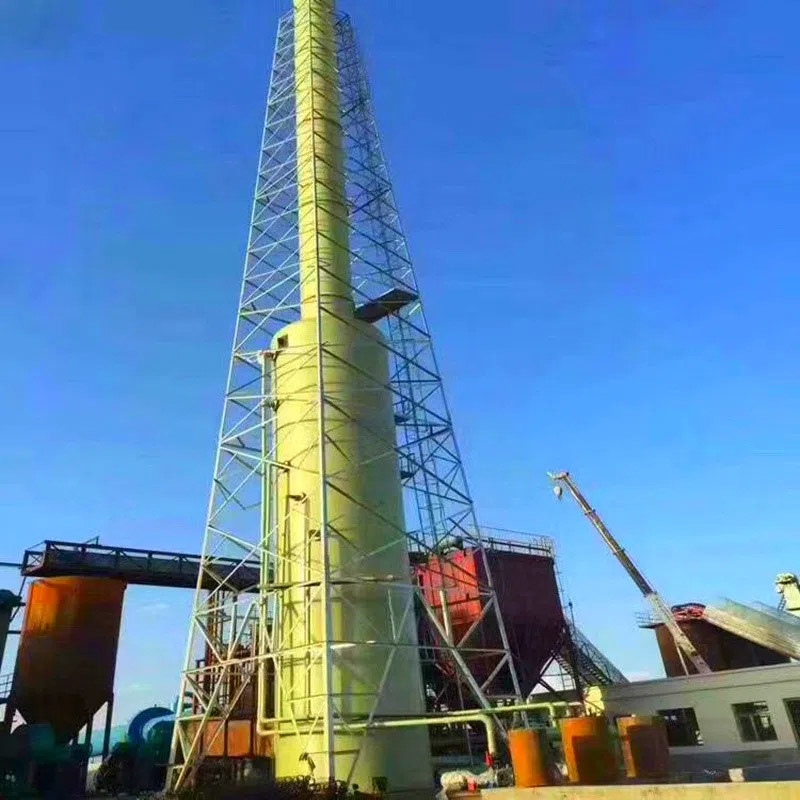
Industrial FRP (Fiberglass Reinforced Plastic) desulfurization towers represent a significant advancement in the field of pollution control, particularly within the chemical and rubber processing sectors. These structures are designed to efficiently remove sulfur dioxide (SO2) from industrial emissions, playing a crucial role in air quality management and regulatory compliance. Their lightweight and corrosion-resistant properties make FRP materials an ideal choice for constructing desulfurization systems.
One of the primary advantages of Industrial FRP desulfurization towers is their enhanced durability. Traditional materials often succumb to the harsh conditions present in flue gas environments, resulting in frequent maintenance and replacement. In contrast, FRP combines strength with resistance to chemical damage, ensuring longevity and reducing operational downtime. This resilience is particularly beneficial in applications where acidic gases are prevalent, making FRP a preferred choice for many manufacturers.
Moreover, the design of Industrial FRP desulfurization towers allows for optimized gas flow, which is critical for maximizing contact between the flue gas and the alkaline scrubbing solution. This interaction enhances the absorption of sulfur dioxide, leading to higher removal efficiencies. Various design configurations, including cross-flow and counter-current systems, can be tailored to meet specific operational requirements, ensuring that each installation is aligned with the unique needs of the facility.
In terms of maintenance, Industrial FRP desulfurization towers are easier to clean and inspect compared to their traditional counterparts. The smooth surfaces of FRP minimize the buildup of residue, thus facilitating efficient maintenance routines. This factor is particularly important for facilities operating under strict environmental regulations, as proper maintenance is essential for consistent performance and compliance.
Additionally, the lightweight nature of FRP contributes to lower installation costs and simplifies handling during transportation to the site. This can lead to faster project timelines, an essential factor for businesses looking to implement pollution control measures promptly. Furthermore, the flexibility of FRP allows for custom designs that can be adapted to fit various dimensions and capacities, making it a versatile solution for diverse industrial applications.
In conclusion, Industrial FRP desulfurization towers serve as a vital component in the effort to reduce harmful emissions from chemical and rubber processing activities. Their advanced materials, efficient designs, and ease of maintenance make them an attractive option for industries aiming to upgrade their pollution control systems and enhance their overall environmental performance. By investing in these innovative solutions, companies not only comply with environmental standards but also contribute positively to global sustainability efforts.
One of the primary advantages of Industrial FRP desulfurization towers is their enhanced durability. Traditional materials often succumb to the harsh conditions present in flue gas environments, resulting in frequent maintenance and replacement. In contrast, FRP combines strength with resistance to chemical damage, ensuring longevity and reducing operational downtime. This resilience is particularly beneficial in applications where acidic gases are prevalent, making FRP a preferred choice for many manufacturers.
Moreover, the design of Industrial FRP desulfurization towers allows for optimized gas flow, which is critical for maximizing contact between the flue gas and the alkaline scrubbing solution. This interaction enhances the absorption of sulfur dioxide, leading to higher removal efficiencies. Various design configurations, including cross-flow and counter-current systems, can be tailored to meet specific operational requirements, ensuring that each installation is aligned with the unique needs of the facility.
In terms of maintenance, Industrial FRP desulfurization towers are easier to clean and inspect compared to their traditional counterparts. The smooth surfaces of FRP minimize the buildup of residue, thus facilitating efficient maintenance routines. This factor is particularly important for facilities operating under strict environmental regulations, as proper maintenance is essential for consistent performance and compliance.
Additionally, the lightweight nature of FRP contributes to lower installation costs and simplifies handling during transportation to the site. This can lead to faster project timelines, an essential factor for businesses looking to implement pollution control measures promptly. Furthermore, the flexibility of FRP allows for custom designs that can be adapted to fit various dimensions and capacities, making it a versatile solution for diverse industrial applications.
In conclusion, Industrial FRP desulfurization towers serve as a vital component in the effort to reduce harmful emissions from chemical and rubber processing activities. Their advanced materials, efficient designs, and ease of maintenance make them an attractive option for industries aiming to upgrade their pollution control systems and enhance their overall environmental performance. By investing in these innovative solutions, companies not only comply with environmental standards but also contribute positively to global sustainability efforts.
Perhaps You Also Need:
All
- All
- Product Management
- News
- Introduction
- Enterprise outlets
- FAQ
- Enterprise Video
- Enterprise Atlas
Address
China ● Glass Steel City, Zaoqiang County, Hengshui City, Hebei Province